Kakamega Forest is one of the most significant natural sites in Kenya — and one of the least visited by international travellers, simply because most people don't know it's there or how easy it is to reach from Kisumu. This is a practical guide: how to get there, what to expect, when to go, and how to make the most of a morning or several days.
What is Kakamega Forest
A tropical rainforest in Western Kenya — the easternmost remnant of the Congo Basin forest that once stretched across equatorial Africa. It covers roughly 240 square kilometres at around 1,500 metres above sea level, which keeps it cool even in the dry season. Most of Kenya's famous wildlife is open savannah; Kakamega is forest — dense, layered and ancient.
What you'll find there
Birds
The main draw for many visitors. Over 330 species have been recorded, including some found nowhere else in Kenya. The Great Blue Turaco is the most photographed; other highlights include the African Broadbill and the Blue-headed Bee-eater.
Primates
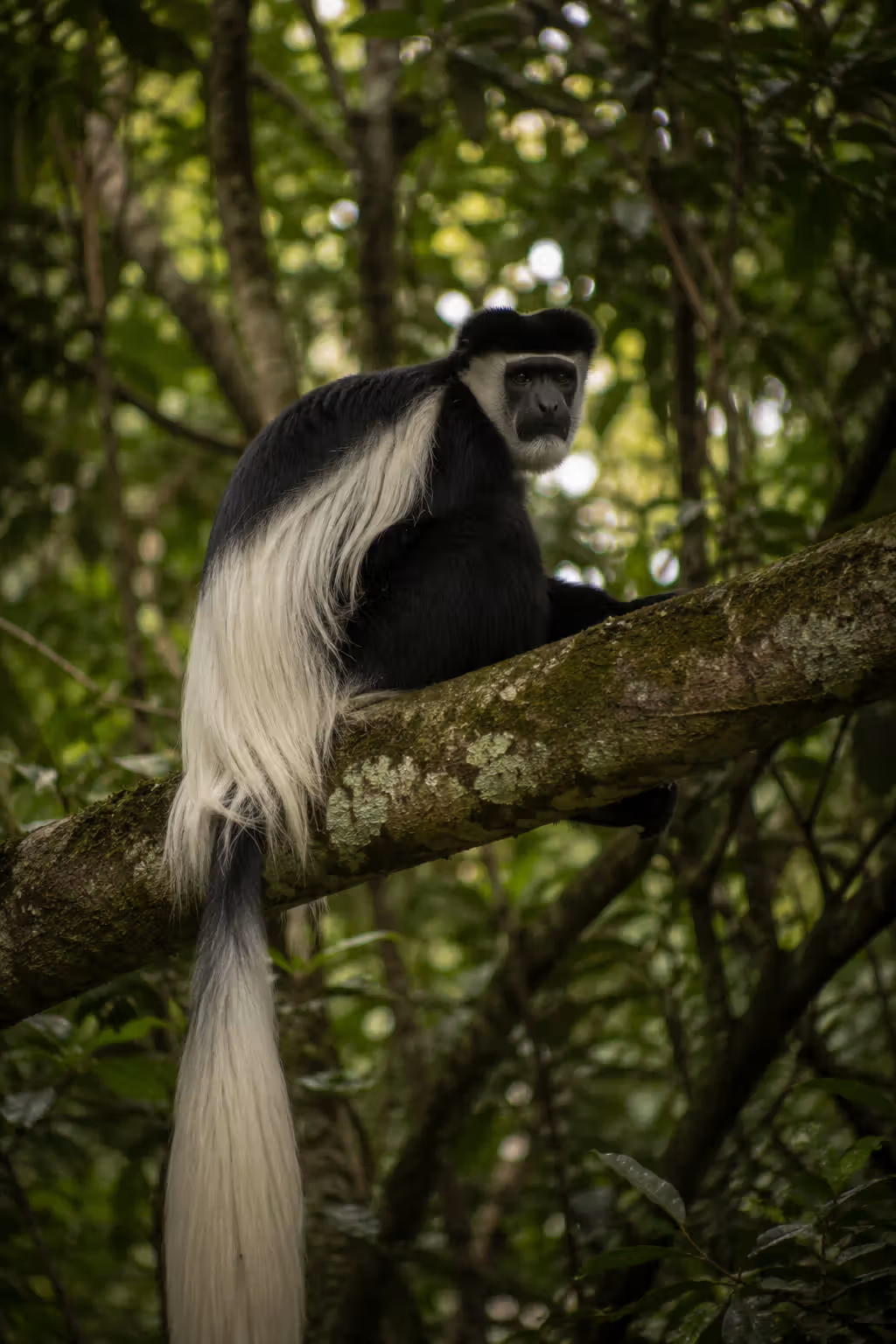
Black-and-white colobus, red-tailed and blue monkeys are regularly seen. Chimpanzees are present but not reliably sighted on standard walks.
Butterflies & plants
Over 400 butterfly species make this one of the most important butterfly sites in Africa. The forest has been used for centuries for medicinal plants, and a guided walk usually includes an introduction to that knowledge.
Getting there from Kisumu
By road, the forest is roughly 45 minutes from central Kisumu — about 50 kilometres north on the A1. Options: self-drive toward Kakamega town and follow signs to the reserve; an organised transfer (recommended for first-timers); or a matatu to Kakamega town followed by a boda boda to the gate. For guests at Hippo Country Spa & Tours, we organise the transfer as part of the tour. See our tours →
What to do inside
Guided walks are the standard way to visit — the forest is dense and a guide matters for both wildlife and safety. A standard walk runs 2–3 hours and suits most fitness levels; a birding-focused walk runs 4–5 hours. Seasonal night walks focus on owls, frogs and insects. Mornings start at dawn, when birds are most active and the light through the canopy is best.
Best time to visit
The forest is green year-round. Best months for birdwatching are April to June and October to December; for comfortable walking, January, February, July and August. Morning always beats afternoon — the forest is active from 5:30am and quietens by 10am.
Where to stay
You can stay in basic guesthouses near the gate — convenient for multiple early mornings inside the forest. If you want comfort, a spa, good food and the option to combine Kakamega with Lake Victoria in the same trip, Hippo Country Spa & Tours in Kisumu is the better base. The drive is 45 minutes: leave early, spend the morning in the forest, return for lunch, and keep the afternoon free for the lake or the spa. Plan your Kakamega tour →